Total Knee Replacement: Who Needs It, Recovery and Results
Total knee replacement is surgery that removes the worn surfaces of the knee joint and replaces them with smooth metal and plastic parts. It is meant for people whose knee arthritis causes daily pain and limits walking even after medicines, physiotherapy and injections have been tried. Most patients stand and take a few steps within a day or two, walk without support in about six to twelve weeks, and keep improving for up to a year.
If you or a parent has been living with knee pain for years, this guide explains when surgery makes sense, when it does not, and what the months after it look like.
What is a total knee replacement?
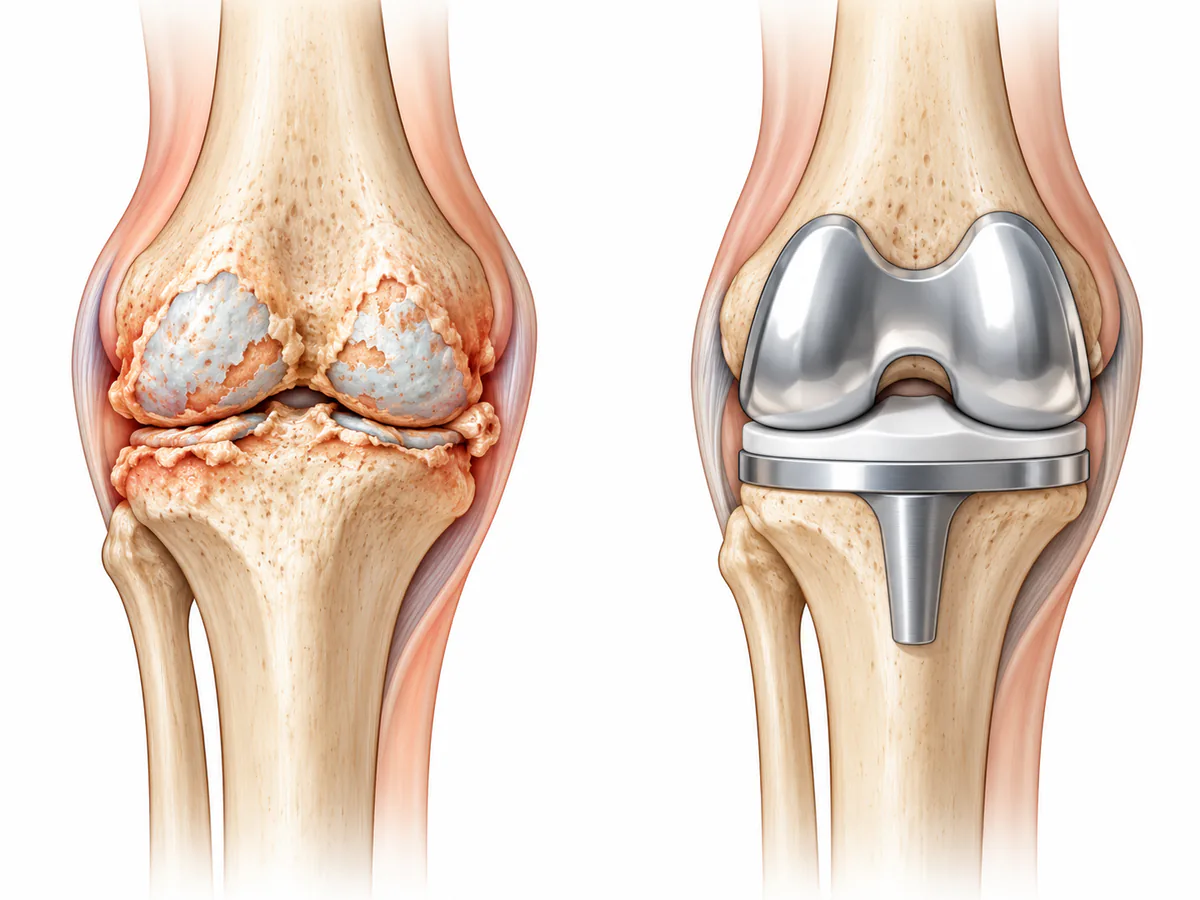
A healthy knee has a layer of cartilage that lets the bones glide over each other. In arthritis that layer wears away, and bone rubs on bone. That is what causes the pain, the stiffness and, over time, the bowing of the legs.
In a total knee replacement the surgeon does not remove the whole knee. Only the damaged surface, a few millimetres of bone and cartilage, is taken off and resurfaced:
- The end of the thigh bone gets a shaped metal cap.
- The top of the shin bone gets a flat metal plate.
- A hard-wearing plastic spacer sits between the two and acts as the new cartilage.
- The back of the kneecap may be resurfaced with plastic if it is worn.
Your own ligaments and muscles stay in place and continue to move the joint.
Who needs a knee replacement?
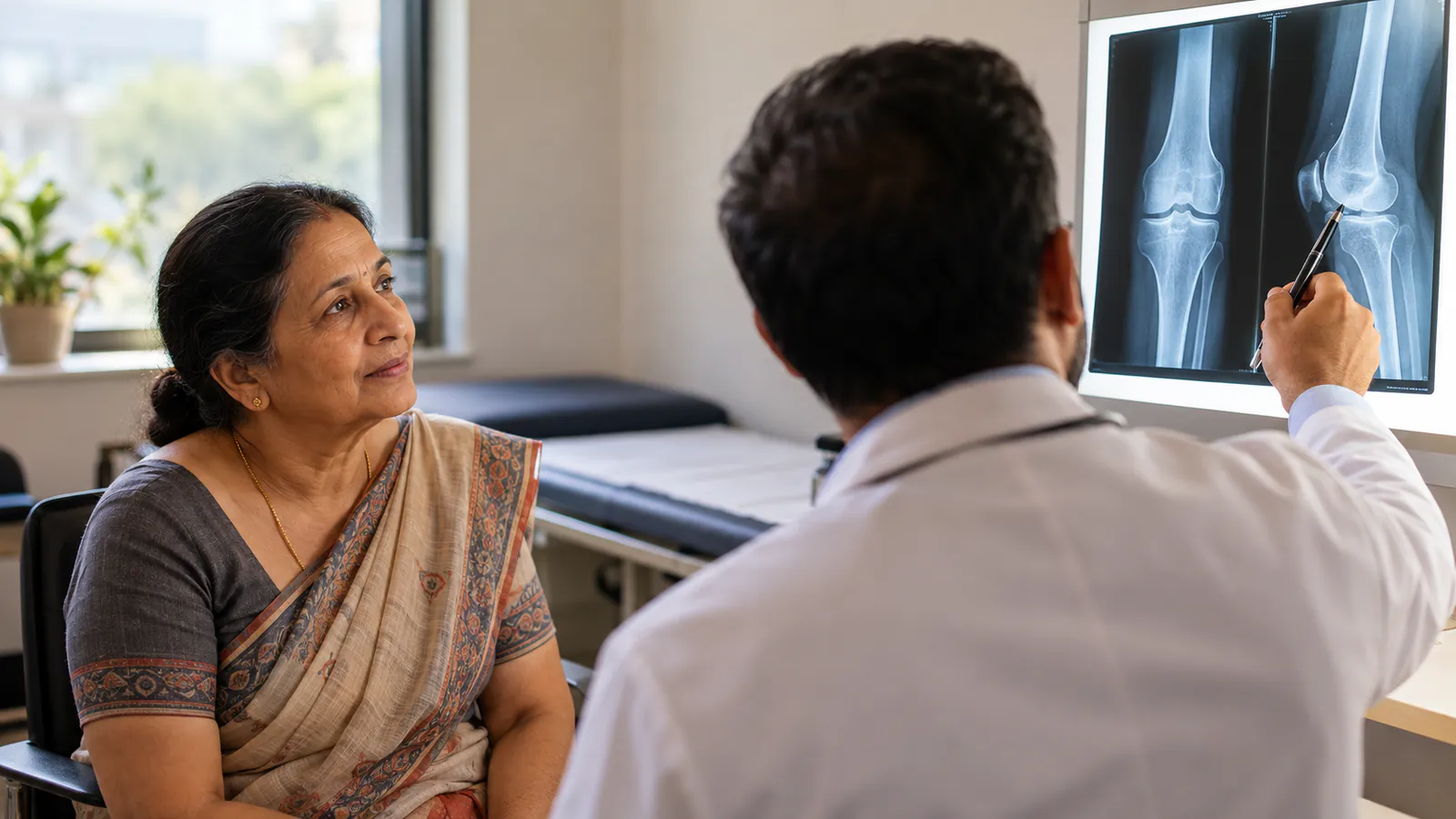
The decision rests on how much the knee is limiting your life, not on age and not on the X-ray alone. Surgery is usually worth discussing when several of these are true:
- Knee pain is present most days and has lasted for months or years.
- Pain wakes you at night or continues when you are resting.
- You cannot walk to the market, climb stairs or get up from a chair without difficulty.
- The leg has become bowed or the knee does not straighten fully.
- Medicines, physiotherapy and injections no longer give lasting relief.
- X-rays show advanced arthritis with loss of joint space.
When you may not need it yet
Many people with knee pain do not need surgery. If the arthritis is early, the pain comes and goes, or you have not yet tried a proper course of treatment, a replacement is rarely the first step. A knee that looks worn on an X-ray but does not trouble you much does not need an operation.
Is there a right age?
There is no fixed age limit. Most patients are between 55 and 80, but the deciding factors are the state of the joint, your general health and how much the pain restricts you. Diabetes, blood pressure and heart conditions do not rule out surgery. They need to be well controlled first, and your surgeon will plan around them.
What to try before surgery
A good orthopaedic assessment starts with the options that do not involve an operation:
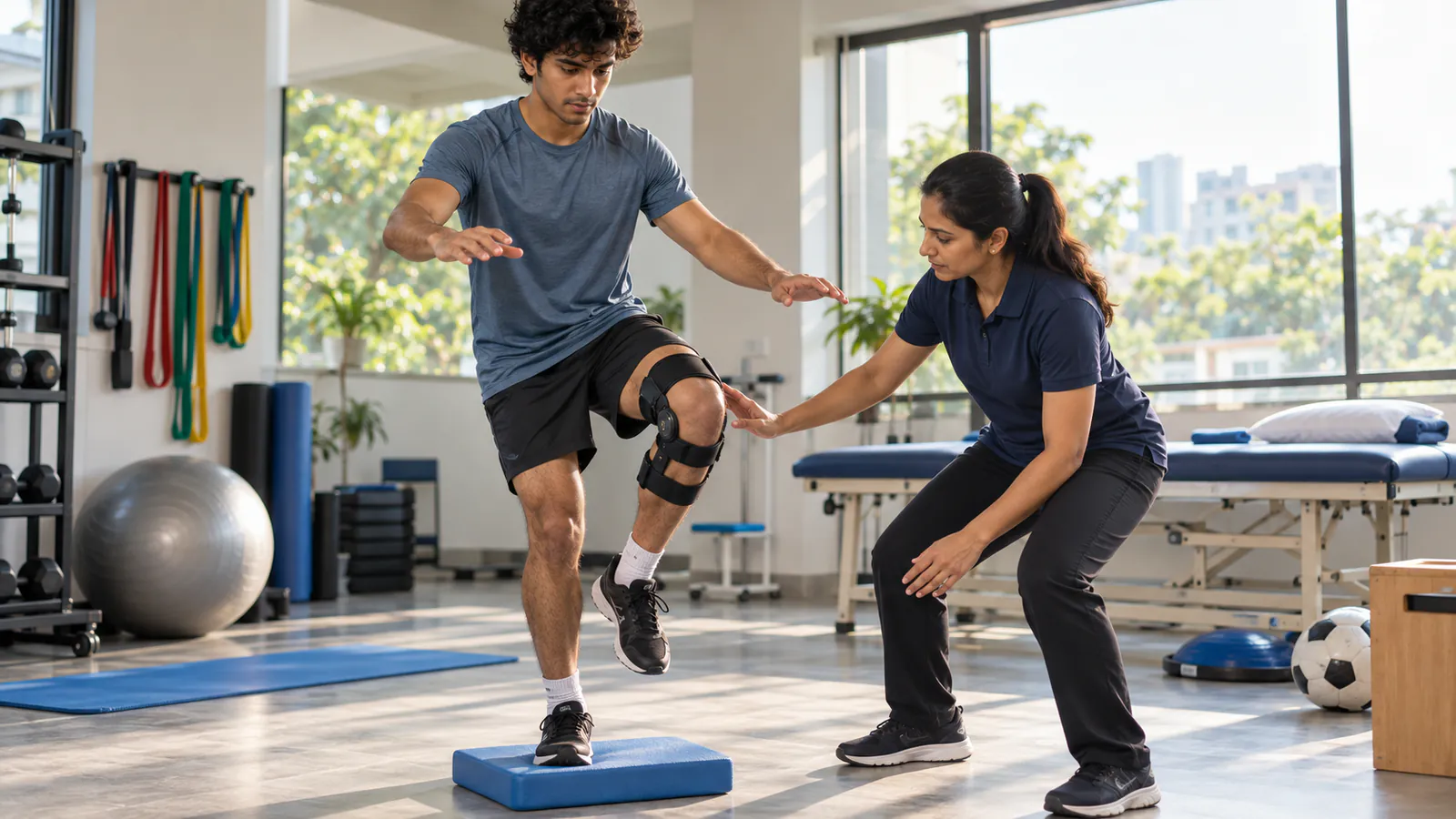
- Physiotherapy to strengthen the thigh and hip muscles, which takes load off the knee.
- Weight reduction, since every extra kilo adds several kilos of force across the knee when you walk.
- Medicines for pain and inflammation, used at the lowest dose that works.
- Injections such as hyaluronic acid or PRP, which can help selected patients with early to moderate arthritis.
- Supports and habits, including a walking stick, suitable footwear and avoiding long periods of squatting.
If these keep you comfortable and active, continue with them. Surgery becomes the better choice when they stop working and your world starts getting smaller.
Before, during and after the operation
Before
You will have blood tests, an ECG, X-rays and a fitness check for anaesthesia. Blood sugar and blood pressure are brought under control, and any infection, including dental or urinary infection, is treated first. A few physiotherapy sessions before surgery make recovery easier.
During
The operation usually takes one to two hours for one knee. Most patients have spinal anaesthesia, which numbs the body below the waist, so you are comfortable and do not feel the surgery.
After
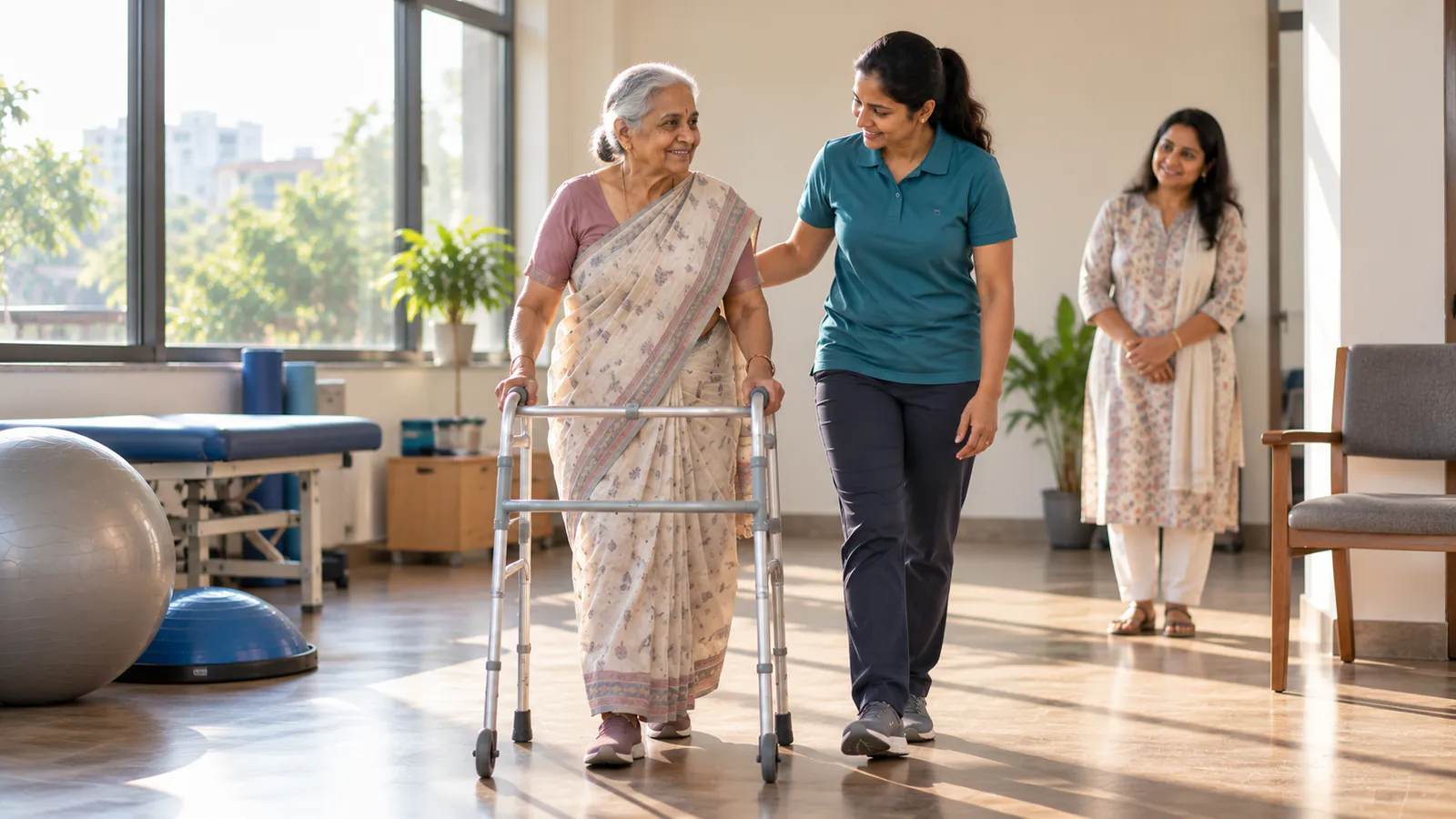
Pain is managed with medicines and nerve blocks. A physiotherapist helps you stand and take your first steps with a walker, usually within a day or two. Most patients go home in three to five days.
Recovery timeline
Everyone heals at a slightly different pace. This is what a typical recovery looks like:
| When | What to expect |
|---|---|
| Day 1 to 2 | Standing and short walks with a walker, guided by a physiotherapist. Simple ankle and thigh exercises in bed. |
| Day 3 to 5 | Walking to the bathroom, starting to bend the knee, learning stairs. Discharge from hospital. |
| Week 1 to 2 | Walking with a walker at home. Exercises several times a day. Stitches or staples come out at about two weeks. |
| Week 3 to 6 | Moving from a walker to a stick. The knee bends further and swelling starts to settle. |
| Week 6 to 12 | Walking without support for most patients. Return to light household work and, once your surgeon agrees, driving. |
| Month 3 to 6 | Comfortable with most daily activities, longer walks and stairs. Some warmth and swelling is still normal. |
| Up to 1 year | Strength and confidence keep improving. This is when most people feel the full benefit. |
Physiotherapy decides how good the result is. The surgery gives you a new joint surface. The exercises give you the bend, the strength and the balance to use it. Patients who do their exercises regularly in the first three months do noticeably better.
Results: what you can realistically expect
Knee replacement is one of the most reliable operations in orthopaedics. Most patients get substantial pain relief and can walk, climb stairs and travel far more comfortably than before.
- How long it lasts: modern implants last 15 to 20 years or longer in most patients.
- What you can do: walking, swimming, cycling, climbing stairs, travel and everyday work.
- What to avoid: running, jumping and heavy impact sports, which wear the implant faster.
- What may stay limited: deep squatting and sitting cross-legged on the floor are difficult for many patients. Ask your surgeon what is realistic for your knee.
One of Dr. Banerjee's patients had both knees replaced and, at the one-year follow-up, was walking without pain. Results vary from person to person, and your surgeon can tell you what to expect in your own case.

Risks you should know about
Every operation carries some risk. With knee replacement the main ones are infection, blood clots in the leg, stiffness, and loosening of the implant over many years. Serious complications are uncommon, and steps are taken to prevent each of them. A small number of patients continue to have some pain after surgery. Your surgeon should discuss these with you openly before you decide.
How much does knee replacement cost in Kolkata?
There is no single price for knee replacement, because the cost is worked out for each patient. You will be given a clear written estimate after your assessment, before you commit to a date.
The final cost depends on:
- Whether one knee or both are replaced.
- The type of implant chosen.
- The hospital and the room category.
- The length of stay and any other health conditions that need care.
- Physiotherapy after discharge.
Many health insurance policies cover knee replacement, often after a waiting period. Check the terms with your insurer before fixing a date.
Knee replacement care at Apex Ortho, Behala
At Apex Ortho, every patient is seen by Dr. Debdutta Banerjee personally at every visit, from the first consultation to the last follow-up. There are no junior doctors and no hand-offs.
- Assessment first. Surgery is advised only when non-surgical treatment has stopped helping.
- Physiotherapy under the same roof. Rehabilitation before and after surgery is done in-house, so your surgeon and physiotherapist work to one plan.
- Physiotherapy at home. Home physiotherapy is also available, which helps in the first weeks after surgery when travelling to the clinic is difficult.
- Close to home. Patients from Behala and South Kolkata can attend follow-ups and physiotherapy without long journeys.
Your consultations, pre-surgery preparation and rehabilitation take place at Apex Ortho. The operation itself is carried out at a fully equipped hospital in Kolkata. Dr. Banerjee is fellowship-trained in robotic joint replacement, and the technique best suited to your knee is discussed with you during the consultation.
Book a consultation: call 8335803341 or 8777519557. Apex Ortho – Joint & Physio Rehab, 6, Diamond Harbour Road, Ground Floor, Behala Chowrasta More, Kolkata 700008. Monday to Saturday, 11 AM to 8 PM.
Frequently asked questions
This article is for general information and does not replace a consultation. Please see an orthopaedic surgeon for advice about your own knee.