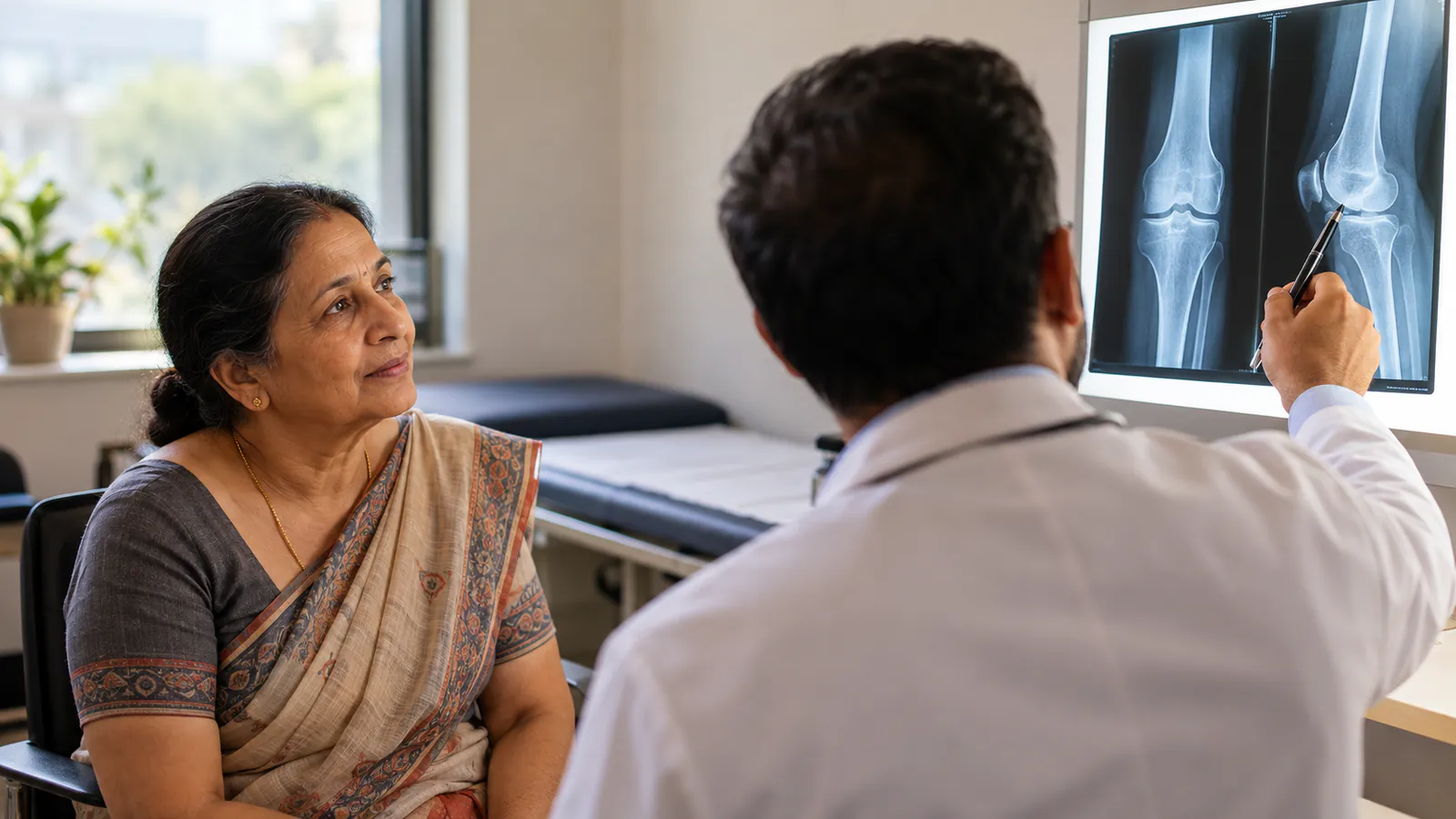
Hip Fracture in the Elderly: Why Early Surgery Matters

A hip fracture in an older adult is a medical emergency, and in most cases it needs surgery within 24 to 48 hours. The aim of early surgery is simple: to get the person out of bed and walking again as quickly as possible. Every extra day spent lying in bed raises the risk of chest infection, blood clots, bedsores and loss of strength, and these complications are often more dangerous than the fracture itself.
If an elderly parent or relative has fallen and cannot stand, this guide explains what to do, how the fracture is treated and what recovery looks like.
What is a hip fracture?
A hip fracture is a break in the upper part of the thigh bone (femur), close to where it joins the pelvis. In older people it usually follows a simple fall at home, from standing height or from the bed. Bones weakened by osteoporosis can break with very little force.
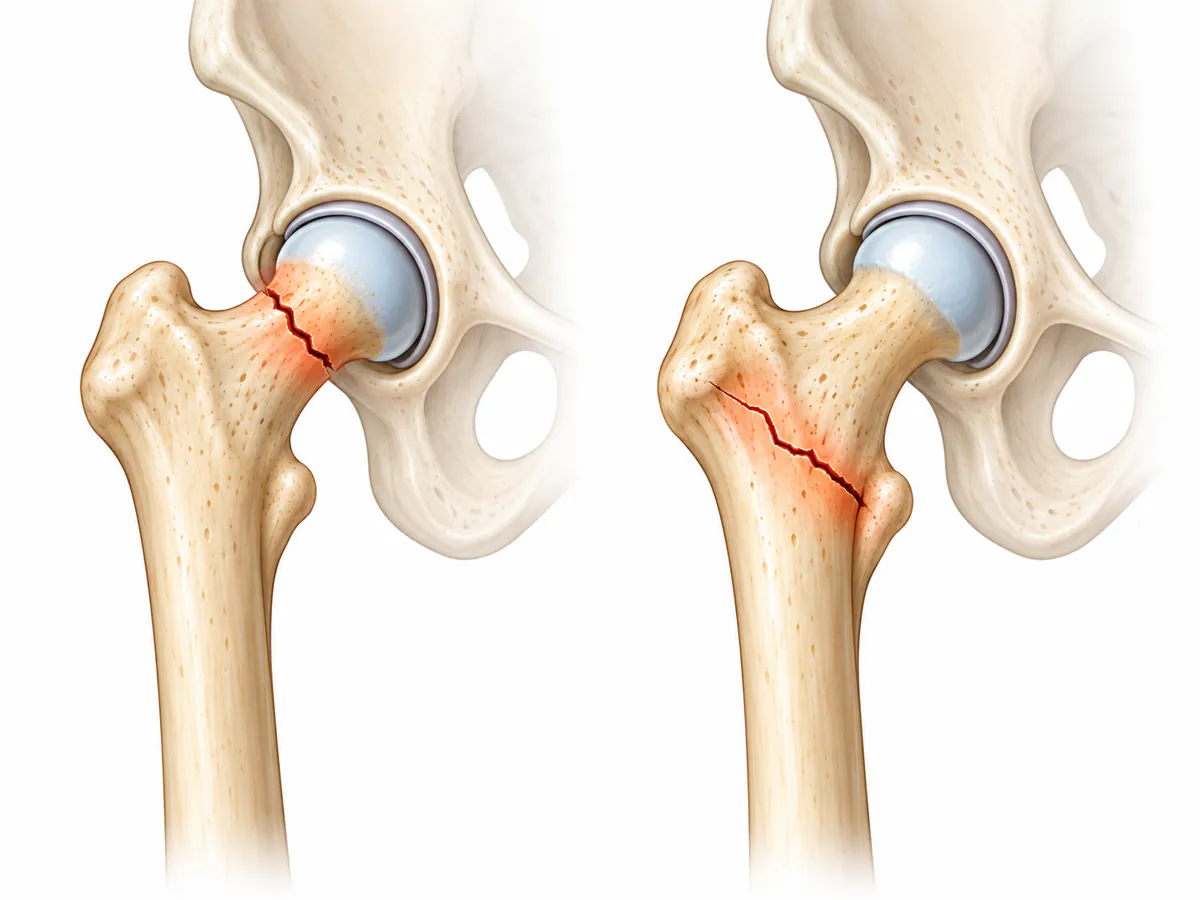
There are two common types, and the type decides the treatment:
| Type | Where the break is | Usual treatment |
|---|---|---|
| Neck of femur fracture | Just below the ball of the hip joint, inside the joint capsule | Replacing the ball of the joint (partial or total hip replacement), or fixing it with screws if the bone has not shifted |
| Intertrochanteric (I.T.) fracture | A little lower, outside the joint capsule | Fixing the bone with a nail inside the femur (PFN) or a plate and screw |
Signs of a hip fracture after a fall
- Severe pain in the hip or groin.
- Unable to stand or put weight on the leg.
- The injured leg looks shorter and the foot turns outward.
- Pain on any attempt to move or lift the leg.
- Swelling or bruising around the hip.
A person who can still walk may still have a fracture. Sometimes the bone cracks without shifting, and the person manages a few painful steps. Hip or groin pain after a fall in an older adult should always be checked with an X-ray.
What to do straight away
- Step 1: Do not make the person stand or walk.
- Step 2: Do not massage the hip or try to straighten the leg.
- Step 3: Keep them lying still and comfortable, with a pillow supporting the leg.
- Step 4: Do not give food or drink, in case surgery is needed soon.
- Step 5: Take them to a hospital the same day, by ambulance if possible.
- Step 6: Carry their list of medicines, especially blood thinners, and any recent reports.
Why early surgery matters
Until the fracture is fixed, the person cannot sit up, turn or stand without severe pain. For an older body, a few days of lying flat causes harm quickly:
- Chest infection. Lying flat makes it hard to breathe deeply and clear the lungs.
- Blood clots. Blood pools in the legs when they are not moving, and a clot can travel to the lungs.
- Bedsores. Fragile skin breaks down under constant pressure.
- Muscle loss. Older adults lose strength rapidly in bed, and it is slow to return.
- Confusion. Pain, strong painkillers and an unfamiliar ward often trigger delirium.
- Urinary infection and constipation, both common with bed rest.
This is why orthopaedic guidelines around the world advise operating on the day of admission or the day after, once the patient is medically fit. Studies consistently link longer delays with more complications, longer hospital stays and a lower chance of returning to independent walking.
When a short delay is justified
Some patients need a day or so of preparation first, for example to control blood sugar, correct low haemoglobin, manage a heart or chest problem, or allow a blood thinner to wear off. This is done quickly and with one aim: to make surgery safe as soon as possible, not to postpone it.
"She is too old for an operation"
Families often worry about this, and it is an understandable fear. In reality, age alone is rarely a reason to avoid surgery. For most elderly patients, not operating carries the greater risk, because it means weeks in bed. Treatment without surgery is reserved for the few who are too unwell for anaesthesia or who were already unable to walk before the fall.
How a hip fracture is treated
Fixing the bone (PFN or plate and screw)
For an intertrochanteric fracture, a metal nail is passed down the centre of the thigh bone through small cuts and locked with screws. This is called a proximal femoral nail, or PFN. It holds the bone firmly enough for the patient to start standing and walking early.
Replacing the joint (hip replacement)
For a neck of femur fracture where the bone has shifted, the blood supply to the ball of the joint is often damaged and it will not heal. The ball is replaced with a metal implant (partial hip replacement), or both the ball and socket are replaced (total hip replacement) in more active patients.
The operation
Surgery usually takes about one to two hours. Most patients have spinal anaesthesia, which numbs the body below the waist. A physician and anaesthetist assess the patient beforehand, and existing conditions such as diabetes, blood pressure and heart disease are managed alongside.
Recovery after hip fracture surgery
Recovery depends on the person's health and how active they were before the fall. This is a typical course:
| When | What to expect |
|---|---|
| Day 1 to 2 | Sitting up and standing with a walker, helped by a physiotherapist. Breathing exercises and ankle movements in bed. |
| Day 3 to 7 | Short walks with a walker, learning to get in and out of bed and use the toilet safely. Discharge from hospital. |
| Week 2 to 6 | Walking at home with a walker. Daily exercises. Stitches come out at about two weeks. |
| Week 6 to 12 | Walking further with more confidence, moving to a stick as strength and balance improve. |
| Month 3 to 6 | Return to most daily activities. Strength continues to build. |
| Up to 1 year | Recovery can continue for a year. Many patients get back close to their earlier level of walking. |
One of Dr. Banerjee's patients with an intertrochanteric fracture was fixed with a PFN and was able to walk the next day. Results vary from person to person, depending on the fracture, bone quality and general health.
What families can do at home
- Help with the exercises every day. Physiotherapy decides how well walking returns.
- Give a protein-rich diet and plenty of fluids to support healing.
- Encourage sitting out of bed and short walks, not long hours lying down.
- Give the blood-thinning and other medicines exactly as prescribed.
- Watch for fever, a wound that leaks, calf swelling or breathlessness, and report these at once.
Preventing the next fracture
Someone who has had one hip fracture has a higher risk of another. Prevention is part of the treatment:
- Treat the osteoporosis. A bone density test, calcium, vitamin D and bone-strengthening medicines where needed.
- Make the home safer. Good lighting, especially at night, grab bars in the bathroom, non-slip mats and no loose rugs or wires.
- Check eyesight and footwear. Poor vision and loose slippers cause many falls.
- Review medicines. Some sleeping tablets and blood pressure medicines cause dizziness.
- Keep moving. Regular walking and balance exercises keep muscles and reflexes working.
Hip fracture care with Dr. Debdutta Banerjee, Apex Ortho, Behala
At Apex Ortho, every patient is seen by Dr. Debdutta Banerjee personally at every visit, from the first assessment to the last follow-up. There are no junior doctors and no hand-offs.
- Prompt assessment. Suspected fractures are assessed without delay, and surgery is planned as early as it is safe.
- Surgery in a fully equipped hospital. The operation is carried out at a fully equipped hospital in Kolkata, with follow-up at the clinic in Behala.
- Physiotherapy under the same roof. Rehabilitation is done in-house, so your surgeon and physiotherapist work to one plan.
- Physiotherapy at home. Home physiotherapy is also available, which matters most for elderly patients who cannot travel in the first weeks.
- Bone health care. Osteoporosis is assessed and treated to lower the risk of another fracture.
For an appointment or advice after a fall: call 8335803341 or 8777519557. Apex Ortho – Joint & Physio Rehab, 6, Diamond Harbour Road, Ground Floor, Behala Chowrasta More, Kolkata 700008. Monday to Saturday, 11 AM to 8 PM. In an emergency outside these hours, go to the nearest hospital.
Frequently asked questions
This article is for general information and does not replace a consultation. After a fall with hip pain, please take the person to a hospital without delay.