ACL Tear: Symptoms, Surgery and Return to Sport
An ACL tear is an injury to the main stabilising ligament inside the knee, and it usually happens during a sudden twist, pivot or awkward landing. The typical signs are a pop in the knee, swelling within a few hours and a feeling that the knee gives way. A fully torn ACL does not heal by itself. Active people who want to return to sport, or whose knee keeps buckling, usually need keyhole surgery to rebuild the ligament, followed by about nine months of rehabilitation before playing again.
This guide explains how to recognise the injury, who needs surgery and who does not, and what the road back to sport looks like.
What is the ACL?
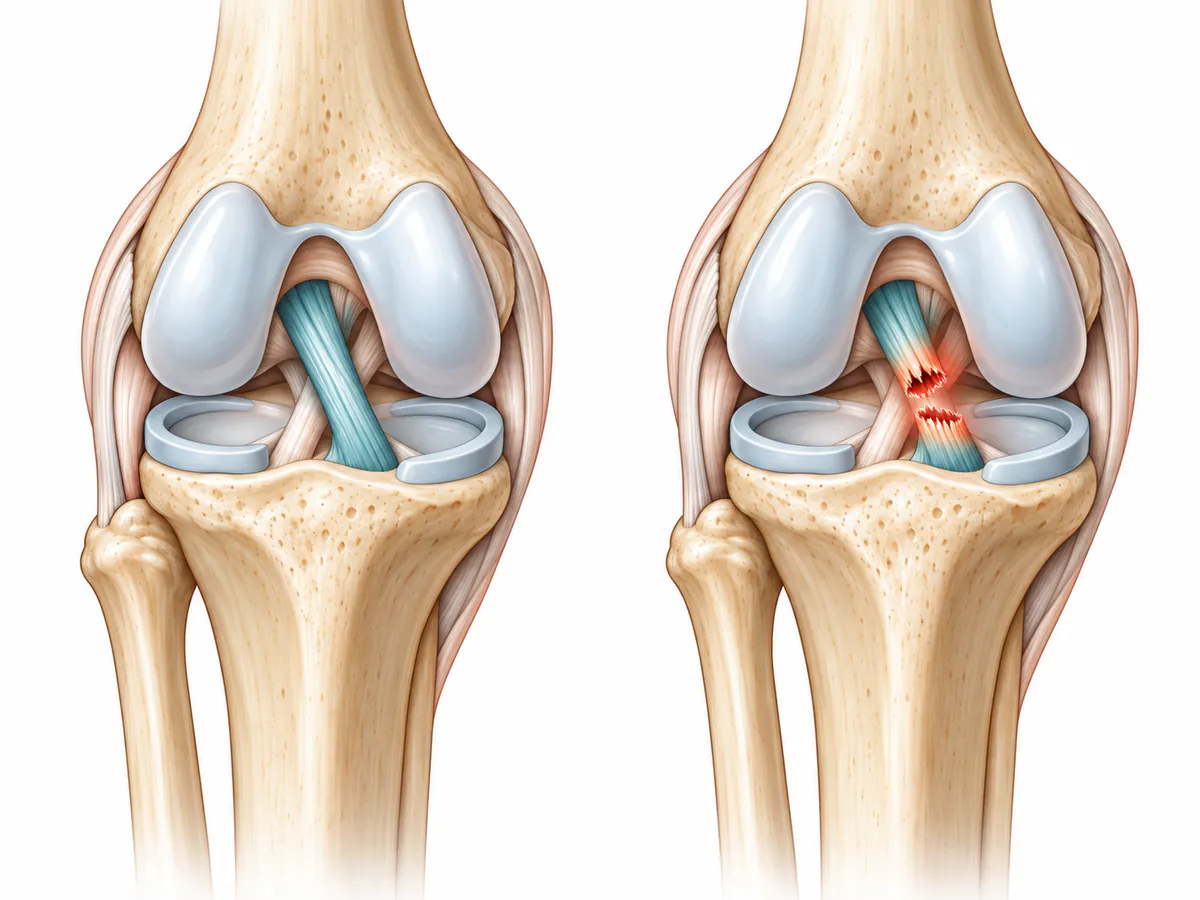
The anterior cruciate ligament, or ACL, is a strong band of tissue in the centre of the knee. It connects the thigh bone to the shin bone and stops the shin from sliding forward or rotating too far. You rely on it every time you change direction, stop suddenly or land from a jump.
How does an ACL tear happen?
Most ACL tears happen without any contact with another player. Common causes are:
- Twisting the knee while the foot is planted on the ground.
- Stopping suddenly or changing direction at speed.
- Landing badly from a jump.
- A direct blow to the knee, as in a tackle.
In Kolkata the injury is seen often in football, cricket, badminton and kabaddi players. It also happens away from sport, in two-wheeler accidents and slips on wet floors or stairs.
Symptoms of an ACL tear
- A pop felt or heard in the knee at the moment of injury.
- Swelling that builds up within a few hours.
- Pain, and being unable to carry on with the game.
- Difficulty bending or straightening the knee fully.
- Later, a feeling that the knee is loose or gives way, especially on turning or coming down stairs.
The pain and swelling often settle in two to three weeks, and many people assume the knee has healed. The ligament has not. The usual sign is that the knee feels fine in a straight line but buckles on twisting. Each time it gives way, the cartilage and the cushioning pads of the knee (the menisci) can be damaged further.
First aid for a twisted knee
- Step 1: Stop playing. Do not try to run it off.
- Step 2: Rest the knee and apply an ice pack wrapped in cloth for 15 to 20 minutes at a time.
- Step 3: Use a crepe bandage for support and keep the leg raised.
- Step 4: Avoid massage and heat in the first few days.
- Step 5: See an orthopaedic surgeon within a few days if the knee swelled quickly or feels unstable.
How is an ACL tear diagnosed?
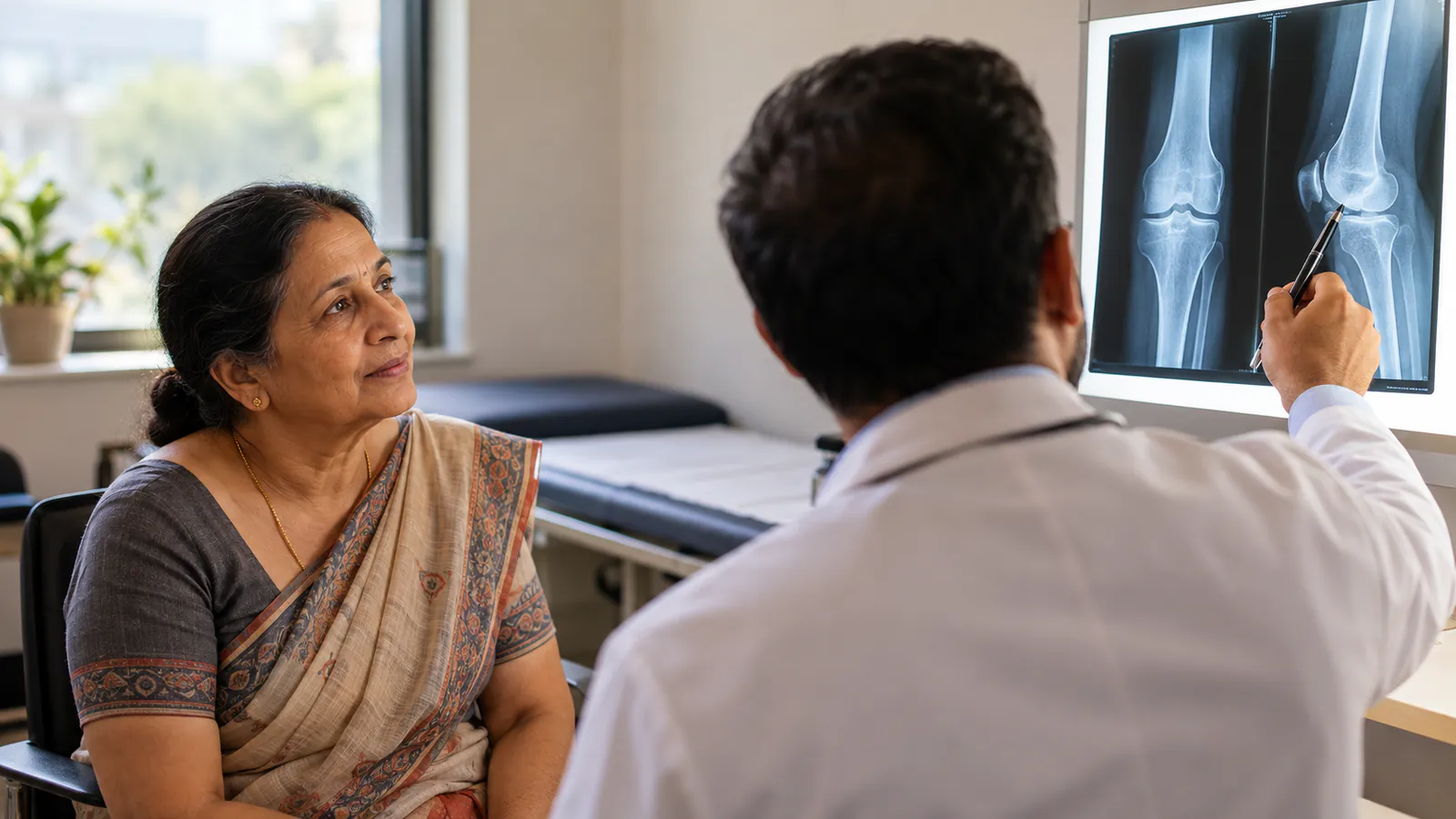
An experienced surgeon can usually diagnose it from the story of the injury and a hands-on examination, in which the knee is gently tested for looseness. An MRI scan confirms the tear and shows whether the menisci, cartilage or other ligaments are also injured. An X-ray is taken to rule out a fracture.
Do all ACL tears need surgery?
No. The decision depends on your age, how active you are, how unstable the knee feels and what else is injured inside it.
| Surgery is usually advised if | Treatment without surgery may suit you if |
|---|---|
| You play sports that involve twisting, jumping or sudden stops | Your activities are mostly walking, cycling or swimming |
| The knee gives way in daily life | The knee feels stable in everyday activity |
| A meniscus or another ligament is also torn | The tear is partial and the knee is stable on examination |
| You are young and active, with many years of activity ahead | You are willing to give up pivoting sports and commit to physiotherapy |
| Your work needs a dependable knee, such as climbing or heavy physical work | Your work is mainly seated |
Treatment without surgery means a structured physiotherapy programme to strengthen the thigh and hip muscles and retrain balance, sometimes with a brace for certain activities. It works well for the right person. For someone whose knee keeps giving way, delaying surgery risks further damage and earlier arthritis.
ACL reconstruction surgery
A torn ACL generally cannot be stitched back together, so the surgeon builds a new ligament. This is called ACL reconstruction.
- Keyhole technique. The operation is done by arthroscopy, through a few small cuts, with a thin camera inside the knee.
- The graft. A piece of your own tendon, most often from the hamstrings at the back of the thigh, is used to make the new ligament.
- Fixing it in place. The graft is passed through small tunnels in the thigh and shin bones and held with screws or buttons.
- Other injuries. A torn meniscus is repaired or trimmed in the same operation.
Surgery takes about one to one and a half hours, usually under spinal anaesthesia. Most patients go home the same day or the next day, and begin walking with support within a day.
When should surgery be done?
ACL reconstruction is rarely an emergency. Results are better when the swelling has settled and the knee bends and straightens well, which usually takes a few weeks. Physiotherapy during this period, often called prehab, makes recovery after surgery faster. Long delays of many months with a knee that keeps giving way are best avoided.
Recovery and return to sport
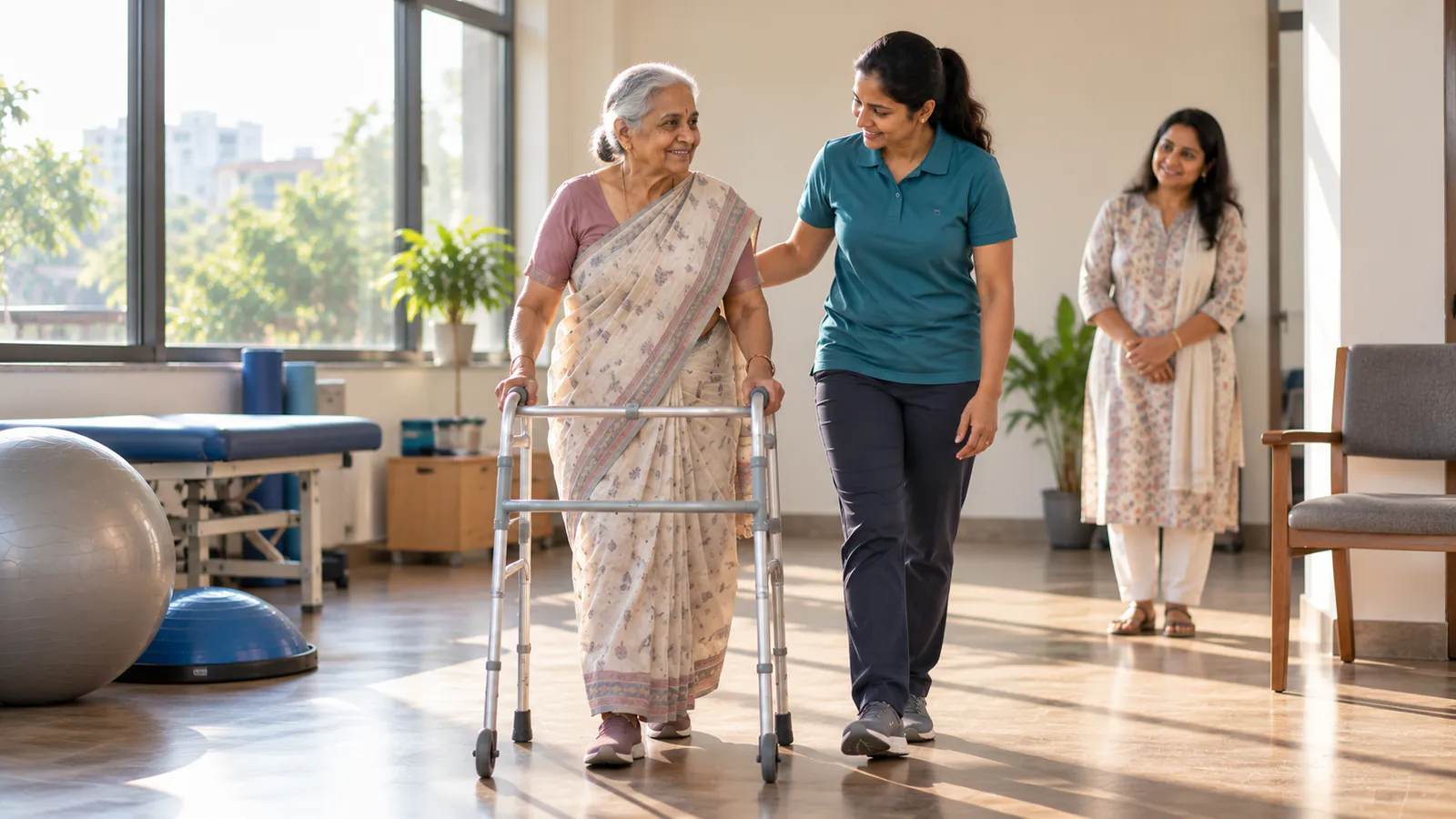
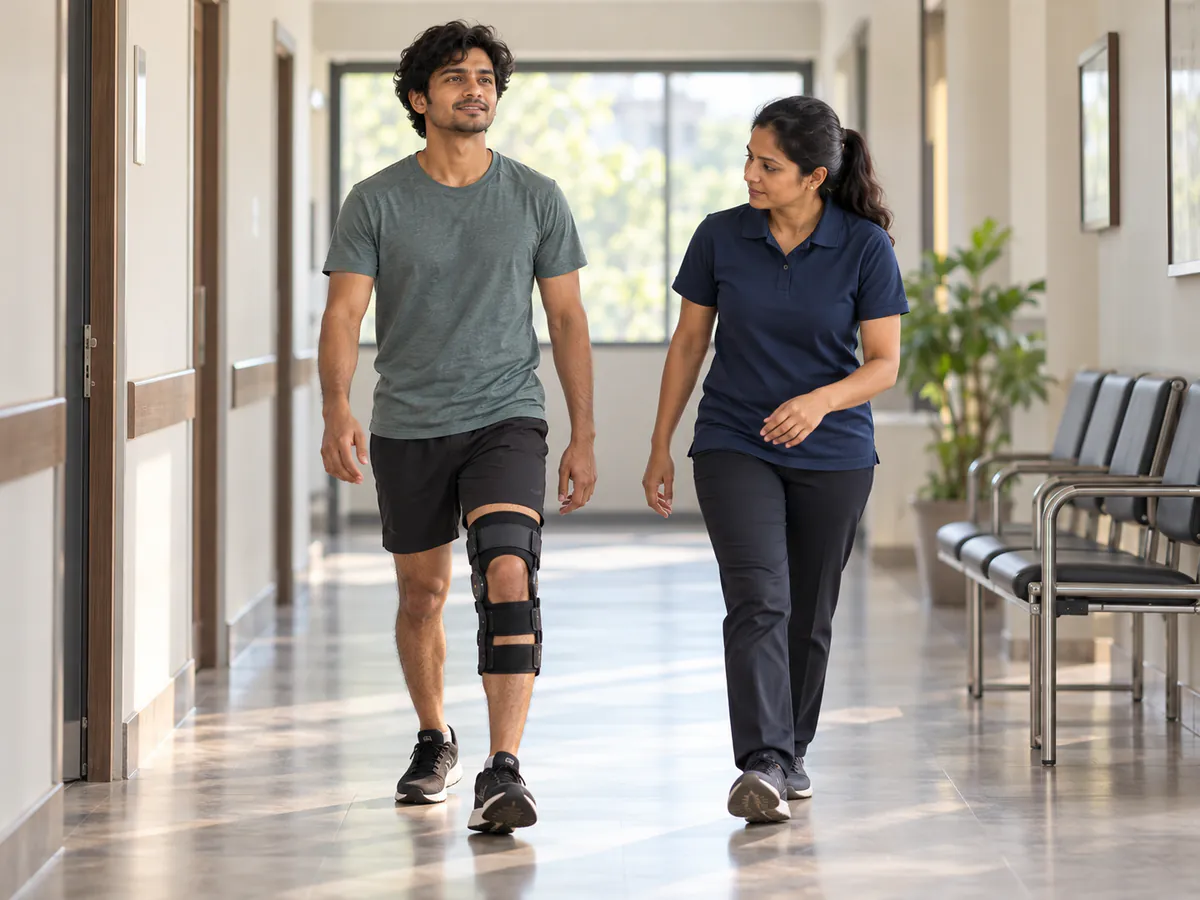
The operation is only the first step. The new ligament takes months to mature and the muscles have to be rebuilt, so rehabilitation is as important as the surgery. A typical course looks like this:
| When | What to expect |
|---|---|
| Week 0 to 2 | Walking with crutches and a brace. Ice and elevation for swelling. Getting the knee fully straight and switching the thigh muscles back on. |
| Week 2 to 6 | Walking without crutches. Bending improves steadily. Stationary cycling and basic strengthening begin. |
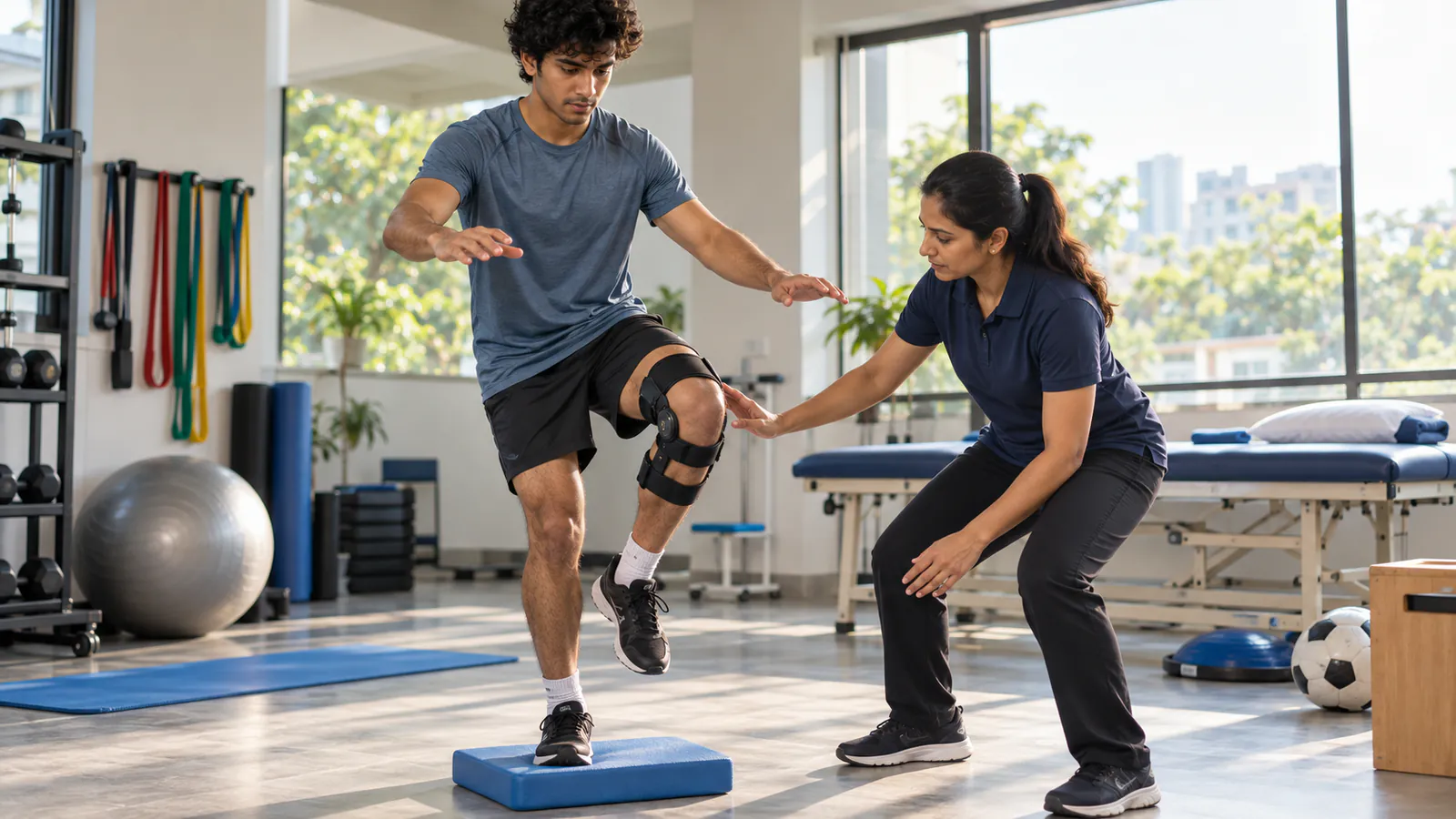
| Month 2 to 3 | Normal walking and stairs. Stronger gym-based exercises and balance training. |
| Month 3 to 4 | Straight-line jogging once strength and control are good enough. |
| Month 4 to 6 | Running, agility drills and sport-specific training, without contact or competitive play. |
| Month 6 to 9 | Practice with the team, building up to full training. |
| Month 9 to 12 | Return to competitive sport, once strength, hop and movement tests are passed. |
Returning too early is the commonest reason for a second tear. Most surgeons advise waiting at least nine months before pivoting sports, and going back only when the operated leg is nearly as strong as the other one. The calendar alone does not decide it.
Returning to work and daily life
- Desk work: usually within one to two weeks.
- Driving: typically after four to six weeks, once you can brake safely.
- Work that involves standing, climbing or lifting: often three months or more.
One of Dr. Banerjee's patients had arthroscopic ACL reconstruction despite poorly controlled diabetes, a higher-risk situation, and was walking the next day. Results vary from person to person, depending on the injury, general health and commitment to rehabilitation.
Risks of ACL surgery
Complications are uncommon. They include infection, knee stiffness, a blood clot in the leg, numbness beside the scar, pain at the front of the knee and re-tear of the graft. Following the rehabilitation plan and not rushing back to sport lowers these risks.
What happens if an ACL tear is left untreated?
Some people manage well without an ACL if they avoid twisting activities. In an active person, a knee that keeps giving way gradually damages the menisci and the joint cartilage. Over the years this can lead to arthritis at a much younger age than usual. This is the main reason an unstable knee should not be ignored once the first pain has settled.
Can ACL injuries be prevented?
- Warm up properly before every game and training session.
- Strengthen the hamstrings, quadriceps, hips and core.
- Practise landing softly with the knees bent and in line with the toes, not falling inward.
- Include balance and agility drills in training.
- Wear footwear suited to the playing surface.
- Do not play through fatigue or with an untreated knee injury.
ACL and sports injury care at Apex Ortho, Behala
At Apex Ortho, every patient is seen by Dr. Debdutta Banerjee personally at every visit, from the first examination to the day you are cleared to play. There are no junior doctors and no hand-offs. Dr. Banerjee holds certification in basic and advanced arthroscopy.
- Honest advice on surgery. You are told clearly whether you need an operation or whether physiotherapy alone is a sound option.
- Keyhole surgery in a fully equipped hospital. The operation is carried out at a fully equipped hospital in Kolkata, with follow-up at the clinic in Behala.
- Physiotherapy under the same roof. Prehab and rehabilitation are done in-house, so your surgeon and physiotherapist work to one plan.
- Physiotherapy at home. Home physiotherapy is also available, which helps in the first weeks after surgery when travelling to the clinic is difficult.
- A planned return to sport. You go back to play in stages, when your knee is ready.
Book a consultation: call 8335803341 or 8777519557. Apex Ortho – Joint & Physio Rehab, 6, Diamond Harbour Road, Ground Floor, Behala Chowrasta More, Kolkata 700008. Monday to Saturday, 11 AM to 8 PM.
Frequently asked questions
This article is for general information and does not replace a consultation. Please see an orthopaedic surgeon for advice about your own knee.